Beatriz Lonskis
Product Designer
PWD Learning Experience
Overview
The Learning & Development (L&D) team recognized a lack of insights regarding the learning experience of professionals with disabilities (PWD) within the company. They sought to better understand current barriers, identify areas for improvement, and define actionable strategies for change.
My Role:
UX Researcher
Team:
-
2 UX Researchers
-
1 Note-taker
-
1 Workshop Facilitator
Hypothesis
-
Inaccessible Content:
PWD employees are unable to fully engage with professional development materials due to a lack of accessibility in company training content.
-
Career Disadvantage:
This accessibility gap places PWD team members at a disadvantage compared to non-disabled employees.
-
Uncertainty & Lack of Support:
Employees may feel uncertain or unmotivated to seek out learning opportunities, or may not know where to go for information and career support.
-
Business Impact:
These barriers hinder PWD professional growth and increase internal costs—such as prolonged bench time between client project assignments.
-
Infrastructure:
Digital and physical infrastructure plays a crucial role in creating an accessible and effective learning environment.
Research goals
-
Identify Needs & Aspirations:
Understand the needs and professional growth goals of PWD employees within the company.
-
Optimize the Experience:
Determine what is needed to make their learning journey more efficient, engaging, and supportive.
-
Pinpoint Barriers:
Identify specific friction points and barriers preventing PWD professionals from having a seamless learning experience.
Chosen method
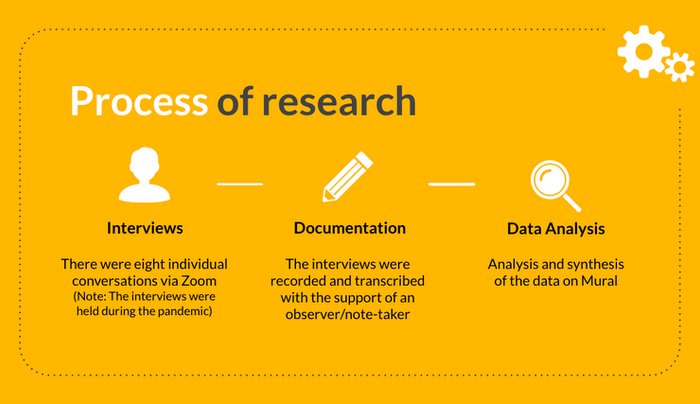
Semi-structured Qualitative Interviews:
Selected to gain deep qualitative insights into each individual's learning journey, capturing nuanced behaviors, concerns, and unanticipated needs.

Research Questions
Professional Trajectory
-
Could you share a bit about your career journey so far?
-
What has been the biggest challenge you’ve faced, and why?
-
What has been your proudest achievement or most positive milestone?
-
Have you noticed any shift in your career path when comparing the pre- and post-pandemic periods?
Overall Learning Experience
-
How do you prefer to learn or study?
-
Which platforms do you typically use for learning, and why?
-
What learning formats or methodologies have contributed most to your professional growth?
Unlocking an Accessible & Effective Learning Experience
-
What does successful professional development look like for you at the company?
Analysis

Quotes


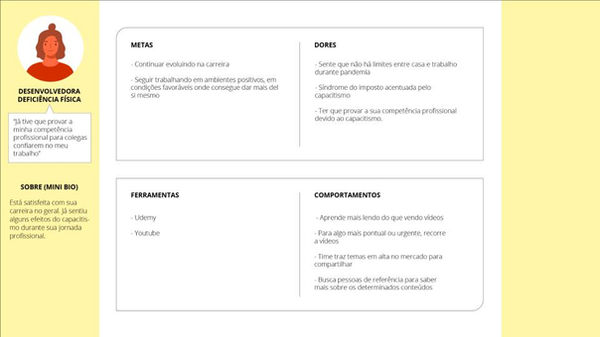
Personas



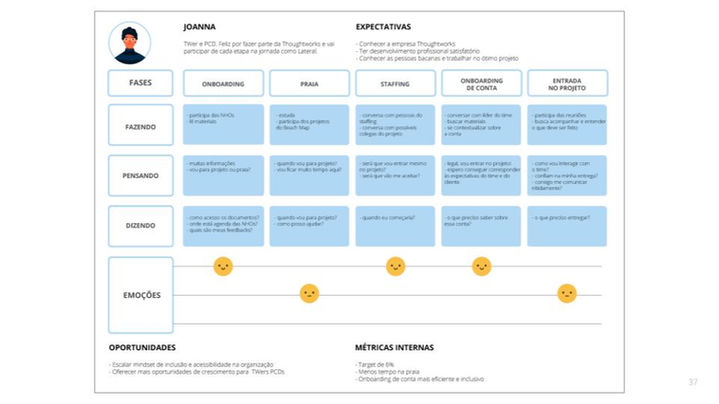
Journey
Hypothesis Validation

Sessions Atomic Research

Recommended Actions
for L&D
-
Accessibility Guidelines & Playbook:
Create a best-practices playbook for developing accessible learning materials across the company.
-
Agenda Transparency:
Share meeting agendas in advance to help participants prepare and foster a sense of psychological safety and predictability.
-
Multi-Format Content:
Offer learning materials in multiple accessible formats (e.g., videos with closed captions, sign language interpreters, and audio descriptions).
-
Dedicated Learning Time:
Establish monthly alignment with stakeholders to ensure dedicated, uninterrupted time for employee learning activities.
-
Content Audit & Remediation:
Implement a feedback mechanism to identify and flag inaccessible L&D materials for remediation.
Recommended Actions
for Other Departments
-
Leadership & Team Awareness:
Raise awareness among leaders and teams regarding unconscious bias, psychological safety, and best practices for conducting accessible, inclusive meetings.
-
End-to-End PWD Journey Review:
Evaluate the end-to-end employee journey for PWD team members to foster higher trust, psychological safety, and career confidence.
-
Customized Expectation Alignment:
Refine and deepen the onboarding and performance management processes to accommodate individual PWD needs and accessibility requirements.
-
Agenda Predictability:
Share meeting agendas and materials in advance across all departments to provide adequate preparation time and reduce cognitive load.
-
Equitable Growth & Recognition Tracking:
Implement data-driven monitoring (metrics on promotions, salary reviews, and career progression) to ensure fair recognition and appreciation of PWD contributions.